Cannabis Rescheduling 2026: What the Move to Schedule III Means for You
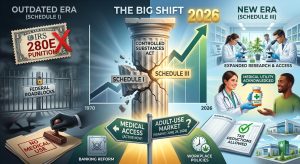
The short answer: As of April 23, 2026, the U.S. Department of Justice (DOJ) has officially moved state-licensed medical marijuana and FDA-approved cannabis products from Schedule I to Schedule III of the Controlled Substances Act. This historic shift acknowledges the medical utility of cannabis for the first time at the federal level, removes the punitive IRS 280E tax burden for medical operators, and paves the way for an expedited hearing on June 29, 2026, to consider moving all forms of marijuana to Schedule III.
Why the Move to Schedule III is a Game-Changer
For over 50 years, cannabis was classified as a Schedule I drug—the same category as heroin—implying it had “no currently accepted medical use.” The reclassification to Schedule III places it alongside substances like ketamine and anabolic steroids.
1. The End of the “Cannabis Tax” (IRS 280E)
The most immediate impact is the elimination of Internal Revenue Code Section 280E. Previously, cannabis businesses could not deduct standard operating expenses like rent, marketing, or payroll.
-
The Result: Medical dispensaries can now reinvest these savings into better product testing, facilities, and lower prices for patients.
2. Expanded Medical Access and Research
By moving to Schedule III, researchers can now study the cannabis plant with significantly fewer federal roadblocks. This will likely lead to more standardized dosing and a deeper understanding of minor cannabinoids.
Does This Legalize Recreational Use?
It is important to note that this order is not a federal legalization of adult-use (recreational) marijuana.
-
Medical Focus: The current order applies specifically to products subject to a qualifying state-issued medical license or FDA approval.
-
Schedule I Status: For now, adult-use/recreational programs remain in a legal gray area under Schedule I, pending the outcome of the June 29, 2026, expedited administrative hearing.
Impact on the Florida Hemp Industry
For Florida-based businesses, the rescheduling occurs alongside significant changes to the definition of “Hemp.”
-
Total THC Standards: Recent federal updates have shifted toward a “Total THC” calculation (inclusive of THCA) for hemp compliance.
-
Synthesis Restrictions: The new federal framework looks more critically at cannabinoids synthesized from a CBD base, though these remain distinct from the “Marijuana” products moved to Schedule III.
What Happens Next?
The industry is now looking toward the June 29, 2026 hearing in Arlington, Virginia. This hearing will determine if the federal government will extend Schedule III status to the entire cannabis industry, including adult-use markets.
What to Watch for in the Coming Months:
-
Banking Reform: With Schedule III status, many expect the SAFER Banking Act (or similar legislation) to finally allow cannabis businesses full access to credit card processing and traditional loans.
-
Workplace Policies: Employers may begin updating drug-testing policies to reflect the federal recognition of medical marijuana.