What Is Hashish? A Connoisseur’s Guide to Moroccan Hash Culture & Solventless Hemp Concentrates
Long before disposable vapes and precision distillate cartridges, there was hash. Specifically, there was Moroccan hashish — one of the most storied, respected, and deeply aromatic concentrate traditions in the world. For generations, connoisseurs across North Africa, Europe, and the Middle East have gathered around slow-burning bricks of pressed resin, drawn not by the pursuit of novelty, but by an appreciation for the plant in its most honest, unadulterated form. If you have ever asked yourself what is hashish and why serious enthusiasts treat it with such reverence, this guide is for you.
📋 Key Takeaways
- Moroccan hashish is traditionally made by dry-sifting kief trichomes from cannabis flower and compressing them into dense bricks.
- Solventless concentrates like hash preserve the full aromatic terpene profile of the plant with no chemical processing.
- Leafy8’s Moroccan Hashish pays homage to the classic Moroccan format in a modern hemp landscape, legally available under the Farm Bill.
- You can crumble hash over flower, smoke it in a pipe, or blend it into a rolling paper for a slow-burning, traditional session.
- Always verify third-party lab testing and Farm Bill compliance before purchasing any hemp concentrate.
The History of Moroccan Hash: Where the Tradition Began
Morocco’s Rif Mountain region, particularly the area surrounding Ketama, has been synonymous with hashish production for centuries. The dry, sun-scorched terrain proved ideal for cultivating resin-heavy cannabis landraces that thrived in the heat and altitude. Local farmers developed a meticulous craft: harvesting mature plants at peak trichome density, then using fine sieves and mechanical agitation to separate the resin glands from the plant material.
This process, now widely referred to as dry-sift kief collection, was elegant in its simplicity. The plant’s most potent structures — the trichome heads, rich in cannabinoids and terpenes — fell through progressively finer mesh screens, separating from the stems, leaves, and excess chlorophyll. What remained was a pale, powdery kief of remarkable purity. Farmers then compressed that kief into dark, dense, slightly glossy bricks that became iconic throughout global connoisseur culture.
Ultimately, the appeal was never purely about intensity. It was about completeness. Traditional Moroccan hash carries the full fingerprint of the plant: the earthy pine notes, the spice, the deep floral undertones that mass-produced extracts often sacrifice in the name of efficiency. For the serious enthusiast, that aromatic completeness is the entire point.
What Is Hashish? The Science Behind the Brick
At its core, hashish takes the form of compressed plant resin. Cannabis and hemp plants produce resin glands called trichomes on the surface of flowers and sugar leaves. These microscopic structures function as the plant’s aromatic and chemical defense system. They contain the full spectrum of cannabinoids, terpenes, and flavonoids that define a particular cultivar’s character.
When producers collect and compress those trichomes together under pressure and controlled temperature, the individual resin heads fuse into a cohesive mass. The result is a concentrate that is entirely solventless — no butane, no CO2, no ethanol, no chemical processing of any kind. Just pure, pressed plant material.
This fundamental difference separates traditional hash from most modern extracts. Solvent-based concentrates like BHO (butane hash oil) or distillate strip terpenes and minor cannabinoids aggressively in pursuit of THC purity. A well-made hash brick, by contrast, preserves the full entourage: every terpene, every minor cannabinoid, every aromatic nuance that the plant worked to produce. Connoisseurs refer to this as the true expression of the cultivar.
Dry-Sift Kief Collection: The Craft Behind the Concentrate
In practice, the dry-sift method is exactly what it sounds like. Harvested, properly dried hemp or cannabis flower is gently agitated over a series of progressively finer mesh screens — often ranging from 150 microns down to 75 microns or smaller. The mechanical action dislodges the trichome heads, which fall through the mesh based on their size and density.
Each pass through a finer screen produces a purer kief fraction. The final collected material — sometimes called “full melt” kief — contains a very high percentage of intact trichome heads with minimal plant contamination. This is the raw material for premium pressed hash. The color of the final kief ranges from pale blonde to golden, depending on the cultivar and the precision of the sifting process. Experienced producers evaluate kief quality under magnification, looking for intact, undamaged trichome heads as a marker of a clean collection run.
Producers consider the dry-sift approach the most artisan-forward collection method precisely because it requires no chemicals, no heat manipulation, and no complex hardware. It demands patience, good screen technique, and an exceptional starting material. The plant does most of the work. The processor simply reveals what was already there.
Cryogenic Compression: What It Is and Why It Matters
Traditional Moroccan farmers used warmth and hand pressure to bind their kief into bricks. Many modern hash producers have moved toward a more refined approach: cryogenic compression.
Rather than applying heat, cryogenic compression chills the collected kief to very low temperatures before pressing. Cold temperatures do several important things simultaneously. The cold makes trichome heads more rigid and less likely to rupture during compression. Additionally, it slows the oxidation of terpenes and cannabinoids. Most importantly, the resin binds more evenly at lower applied pressure, preserving aromatic integrity rather than cooking it away.
The result is a denser, more uniform brick with a better preserved terpene profile than a heat-pressed equivalent. When you break apart a cryogenically compressed brick, you get a more consistent crumble, a cleaner cross-section, and a noticeably more complex aromatic release than you would from a product made under heat. As a result, precision-minded producers prefer the cold-press approach, even though it is technically more demanding.
Leafy8’s Moroccan Hashish does not come from traditional Moroccan cannabis. It is a hemp-derived product crafted to pay homage to the classic Moroccan hash format in a modern hemp landscape. While the exact blend is proprietary, the result carries the same textural character, aromatic depth, and slow-burning profile that hash connoisseurs have always appreciated — while remaining fully compliant under the Farm Bill.
Why Connoisseurs Choose Solventless: The Case for Unadulterated Plant Resin
The conversation around solventless concentrates has grown considerably in recent years. However, the underlying philosophy is old. Connoisseurs who prefer hash over other formats are making a deliberate choice about what they value in a session.
Solvent-based extracts — including distillate, live resin, and most vape cartridge oils — require chemical processing. Even the cleanest distillate begins life as a stripped, nearly flavorless isolate that must have terpenes reintroduced afterward. Those terpenes are sometimes cannabis-derived, sometimes botanical, and sometimes synthetic. The flavor you experience from a distillate vape is partly a reconstruction, an approximation of what the plant originally contained.
Hash, however, is fundamentally different. A properly made hash brick undergoes no solvent washing, no molecular distillation, and no terpene reintroduction. The aromatic profile you experience is the authentic one the plant produced. Pine, spice, earth, floral top notes — all present in their original ratios, in the original compounds the cultivar expressed. That authenticity is irreplaceable. It is why a seasoned hash enthusiast can identify a good batch from the first exhale before any cannabinoid effect has time to develop.
For those who want the cleanest possible relationship between plant and experience, solventless is simply the honest choice.
How to Smoke Hash: Methods for Every Style of Session
Hash is one of the most versatile concentrates available. Unlike most modern extracts, it does not require specialized hardware, dabbing equipment, or electronic devices. It meets the consumer wherever they are. Here are the most popular approaches.
Crumbling Hash Over Flower
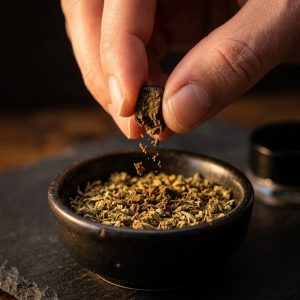
This is the most accessible entry point. Gently warm a small portion of the hash brick between your fingers or with a very brief pass of a lighter flame. The warmth makes the brick pliable and easy to work with. Crumble a small piece — start with a matchhead-sized amount — and distribute it evenly over packed hemp flower in a bowl or pipe. The hash burns more slowly and at a lower temperature than raw flower, extending the session and adding aromatic complexity. Together, these elements create a layered experience that single-source flower alone cannot replicate.
The Classic Pipe Method
A simple mesh-screen pipe or traditional chillum allows you to smoke hash on its own without any flower base. Place a small crumbled portion over the screen, apply gentle heat, and draw slowly. Because hash is denser than flower, it benefits from a low, patient heat approach rather than a direct, sustained flame. A glass spoon pipe with a stainless steel mesh screen is the most common setup for standalone hash sessions.
The Rolling Paper Method
The old-school European approach involves crumbling fine hash pieces evenly into a rolling paper, sometimes mixed with a small amount of dried herb for structural support. The key is even distribution throughout the length of the paper so the hash does not cluster in one spot and create an uneven burn. When done well, the result is one of the slowest, most aromatic smokes a concentrate can produce.
A Note on Concentrate Vaporizers
Purpose-built concentrate vaporizers designed for solventless solids can handle pressed hash effectively. Set temperatures between 160°C and 185°C (320°F to 365°F) tend to produce the best terpene expression without burning the material. Lower temperatures favor aromatic complexity. Higher temperatures favor deeper, more full-bodied vapor.
Leafy8’s Moroccan Hashish: Old-School Format, Modern Hemp Standards
You no longer need a medical card to experience premium, slow-burning concentrates; you can enjoy Authentic Moroccan Hashish delivered directly to your doorstep legally under the Farm Bill.
The team at Leafy8’s Winter Park, Florida facility hand-crafts Moroccan Hashish using a proprietary hemp-derived blend developed to honor the spirit of the classic Moroccan format. The formulation produces a dense, dark brick with a malleable, slightly glossy texture. It breaks apart cleanly when warmed and releases a complex earthy, piney, spiced aromatic profile that hash enthusiasts recognize immediately. The active cannabinoid in Leafy8’s Moroccan Hashish is HHC (Hexahydrocannabinol), a hemp-derived cannabinoid known for its smooth, well-rounded character — delivering an elevated experience that fits naturally within the slow, intentional ritual that hash culture has always celebrated.
For transparency, Leafy8 sends every production batch to ACS Laboratory for full-panel third-party testing. The panel covers cannabinoid potency, heavy metals, residual solvents, pesticides, and microbials. Additionally, the formulation contains no synthetic additives, no cutting agents, and no solvents of any kind. Just pressed hemp resin that meets Farm Bill compliance, with a Delta-9 THC content of less than 0.3% by dry weight, making it fully legal for nationwide delivery.
The product is available as a standalone concentrate or as a premium addition to any session ritual. For consumers who appreciate the heritage and craftsmanship behind traditional hash formats but want the legal accessibility and quality assurance of a modern, lab-verified hemp product, Leafy8’s Moroccan Hashish represents the clearest available bridge between those two worlds.
Frequently Asked Questions About Hashish and Moroccan Hash
What is hashish made of?
Hashish is made from compressed plant resin — specifically the trichome glands (kief) that cover cannabis or hemp flower. Traditional dry-sift hash production involves mechanically separating trichomes from plant material using fine mesh screens, then pressing the collected kief into a solid brick under controlled temperature and pressure.
Is Leafy8’s Moroccan Hashish the same as traditional Moroccan hash?
No — Leafy8’s Moroccan Hashish is a proprietary hemp-derived blend crafted to pay homage to the classic Moroccan format in a modern, legal hemp landscape. The active cannabinoid is HHC. The resulting texture, aroma, and smoking experience closely emulate what traditional hash connoisseurs love, but it is Farm Bill compliant and legal for nationwide delivery with no medical card required.
How is hash different from a wax or distillate?
Hash is a solventless concentrate. It contains no chemical solvents, no artificial terpene additions, and no molecular distillation. Waxes and distillates are typically produced using chemical solvents or heat-based molecular separation, which strips away much of the original terpene profile. Hash preserves the plant’s full aromatic and cannabinoid expression in its natural ratios.
How much hash should a beginner use?
Start very small. Because hash is a concentrated form of hemp resin, it has a significantly higher cannabinoid density than raw flower. A matchhead-sized amount is the appropriate starting point for anyone new to hash. Crumble it over flower rather than smoking it alone to further moderate the experience. Wait a full 30 to 45 minutes before adding more to any session.